Employee engagement is generally defined as the level of commitment and involvement an employee has towards their work and the organization’s goals, as well as their enthusiasm and proactivity in the workplace. Simply put, it reflects the extent to which employees are willing to work hard for the company’s success and take on more responsibilities.
The level of employee engagement is directly related to the development of the enterprise. Highly engaged employees tend to be more dedicated; they don’t just work for a paycheck but genuinely want the organization to succeed. Such employees are more likely to generate innovative ideas, take the initiative to solve problems, and hold a more positive attitude toward challenges at work. Therefore, high employee engagement can bring higher production efficiency, better product quality, and superior service to the enterprise.
Highly engaged employees are also more likely to become loyal advocates for the company, actively recommending it to family and friends, thereby enhancing the company’s brand influence and market reputation. At the same time, highly engaged employees are more prone to forming a spirit of teamwork, facing and solving problems together, and further improving the overall operational efficiency of the company.
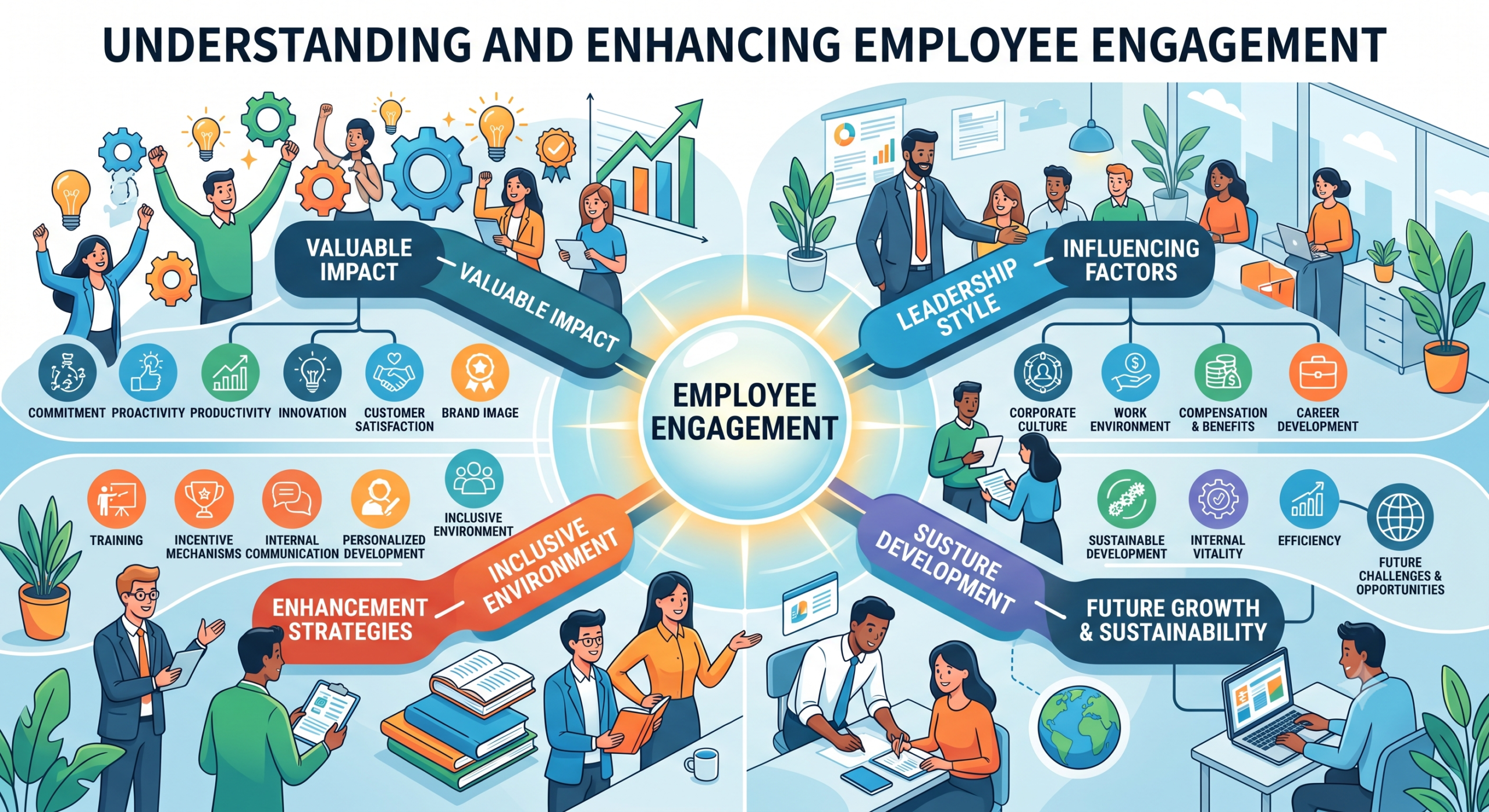
Employee engagement is not only about employees’ work attitudes and satisfaction but also directly impacts the overall operation of the business. The following will detail the significant impact of employee engagement on business operations from several aspects: improving production efficiency and innovation capabilities, enhancing customer satisfaction and brand image, reducing employee turnover and recruitment costs, and creating a positive work atmosphere and teamwork spirit.
Improving Production Efficiency and Innovation Capabilities: Highly engaged employees are full of passion and motivation for their work. They focus more on tasks and reduce distractions, thereby effectively improving production efficiency. In addition, high employee engagement can stimulate innovative thinking. When employees are fully invested in their work, they are more likely to identify problems and propose solutions, driving innovation in products and services and bringing a competitive advantage to the enterprise.
Enhancing Customer Satisfaction and Brand Image: Employees are the bridge between the company and its customers. Highly engaged employees are more likely to provide high-quality service because they care about the company’s success and want to create the best experience for customers. This positive service attitude is passed on to customers, enhancing customer satisfaction and thereby elevating the company’s brand image. A positive brand image not only attracts new customers but also promotes the loyalty and repeat purchase behavior of existing customers.
Reducing Employee Turnover and Recruitment Costs: Employee engagement is closely related to employee job satisfaction and loyalty. When employees feel their work is valued and can find a sense of belonging and achievement within the company, they are more likely to stay with the company long-term. This not only reduces the employee turnover rate but also cuts down on recruitment and training costs associated with employee departures. A stable workforce helps the company maintain operational continuity and avoid business interruptions caused by staff turnover.
Creating a Positive Work Atmosphere and Teamwork Spirit: Highly engaged employees are often passionate about their work, and their positive attitude can infect the colleagues around them, thereby creating a positive work environment. In such an environment, employees are more willing to cooperate with each other, face challenges together, and form a strong teamwork spirit. This team spirit not only improves the company’s operational efficiency but also enhances the company’s cohesion and ability to withstand risks.
In summary, the impact of employee engagement on business operations is comprehensive, from improving production efficiency to enhancing customer satisfaction, to reducing employee turnover and creating a positive work atmosphere; every link is crucial. Therefore, enterprises should prioritize the enhancement of employee engagement and formulate effective strategies and measures to stimulate employees’ work enthusiasm and innovation capabilities, thereby achieving sustainable development for the enterprise.
II. Factors Influencing Employee Engagement
Employee engagement is influenced by a variety of factors. The following will provide a detailed introduction from several dimensions: the shaping of corporate culture and values, leadership style and employee motivation, work environment and facility conditions, compensation and benefits, and employee care, as well as personal career development opportunities and prospects.
The Shaping of Corporate Culture and Values Corporate culture is a collection of internal behavioral norms and values within an enterprise, profoundly influencing employees’ work attitudes and behaviors. A positive, upwardly mobile corporate culture that emphasizes teamwork and an innovative spirit can stimulate employees’ sense of belonging and pride, thereby increasing their engagement. Conversely, if the corporate culture is negative, bureaucratic, or lacks clear value guidance, employees may feel confused and alienated, leading to reduced engagement.
The shaping of values is equally important. When a company’s values align with an employee’s personal values, the employee is more likely to develop a sense of identification and be willing to exert effort toward the company’s goals. Therefore, enterprises should clarify and communicate their values, and through training and guidance, enable employees to understand and accept these values, thereby increasing their engagement.
Leadership Style and Employee Motivation Leadership style has a significant impact on employee engagement. An open and supportive leadership style can encourage employees to express their ideas and participate in the decision-making process, thereby increasing their engagement and job satisfaction. Conversely, an autocratic or laissez-faire leadership style may lead to employees lacking a sense of participation, reducing their motivation to work.
Employee motivation is also an important means to increase engagement. In addition to basic compensation and benefits, enterprises can motivate employees through goal setting, performance evaluation, and reward mechanisms. When employees feel their work is recognized and rewarded, they are more likely to actively participate in work and strive to achieve corporate goals.
Work Environment and Facility Conditions A good work environment and facility conditions can improve employees’ work efficiency and comfort, thereby enhancing their engagement. For example, providing a spacious and bright office space, advanced office equipment, and convenient transportation conditions can all help improve employee job satisfaction and engagement. In addition, enterprises can also reduce employees’ work pressure by improving work processes and providing necessary resources and support, allowing them to focus more on their work and actively participate in it.
Compensation and Benefits and Employee Care Compensation and benefits are among the important factors employees consider when choosing a job. A reasonable compensation and benefits system can reflect the company’s recognition and respect for its employees, thereby improving employee satisfaction and loyalty. In addition to basic salaries, enterprises can also consider providing performance bonuses, health insurance, and annual leave as benefits to attract and retain outstanding employees.
Employee care is also a crucial factor in improving engagement. Enterprises should pay attention to employees’ life and work situations, providing necessary support and help. For example, establishing Employee Assistance Programs (EAPs) to focus on employees’ mental health and family issues, and providing flexible work hours and locations, can increase employees’ sense of belonging and loyalty to the company.
Personal Career Development Opportunities and Prospects Employees usually attach great importance to their career development. If an enterprise can provide clear promotion paths and training opportunities, employees will feel they have a longer-term development prospect within the company, thereby actively participating in work. In addition, enterprises can also encourage employees to participate in cross-departmental or cross-disciplinary project collaborations to broaden their horizons and experience.
To improve employee engagement, enterprises should regularly communicate with employees about their career development, understand their expectations and goals, and provide corresponding support and resources. When employees see that their efforts can be recognized and they have the opportunity to realize their personal value, their engagement will naturally increase.
III. Strategies and Practices to Enhance Employee Engagement
Enhancing employee engagement is an important guarantee for the continuous development of an enterprise. The following strategies and practices can be approached from multiple dimensions to effectively improve employee engagement.
Regularly Conduct Employee Training and Skill Enhancement Courses: Enterprises should regularly conduct targeted training and skill enhancement courses based on the job requirements and personal development needs of employees. This not only improves employees’ professional capabilities and work efficiency but also allows them to feel the company’s attention and investment in them, thereby enhancing their engagement and loyalty. Training courses can include professional skills training, leadership training, and communication skills training, aimed at helping employees better perform their jobs and possess greater development potential.
Establish Effective Incentive Mechanisms and Reward Systems: To stimulate employees’ enthusiasm for work and engagement, enterprises need to establish effective incentive mechanisms and reward systems. This can include various forms such as performance bonuses, outstanding employee awards, and promotion opportunities. Clear reward standards let employees know their work goals and the direction of their efforts, allowing them to invest more in their work. At the same time, enterprises can also provide personalized reward plans based on employees’ personal needs and preferences, such as offering travel opportunities or health insurance, to increase employees’ sense of belonging and satisfaction with the company.
Strengthen Internal Communication and Information Sharing: Good internal communication and information sharing are crucial for improving employee engagement. Enterprises should establish unhindered communication channels, encourage employees to make suggestions and comments, and provide timely feedback. At the same time, regular team meetings, workshops, and other activities can promote communication and cooperation among employees to solve problems together. In addition, enterprises can also use internal network platforms or bulletin boards to promptly share company news, business information, and industry updates, making employees feel they are part of the company, thereby increasing their engagement and sense of responsibility.
Provide Personalized Career Development Paths and Promotion Opportunities: Every employee has their own career plan and goals. Enterprises should provide personalized career development paths and promotion opportunities based on the individual characteristics and needs of employees. By formulating clear promotion paths and training plans for employees, they can see their development prospects within the company, thereby engaging more actively in their work. At the same time, enterprises can also provide employees with opportunities for job rotation across departments or fields to broaden their horizons and experience, enhancing their job challenges and satisfaction.
Create a Supportive and Inclusive Work Environment: A supportive and inclusive work environment allows employees to feel respected and recognized, thereby improving their engagement and job satisfaction. Enterprises should advocate a diverse cultural atmosphere, respect employee differences and diversity, and avoid discrimination and prejudice. At the same time, provide necessary work support and resource guarantees for employees, such as reasonable work arrangements and flexible work options, to reduce employee work pressure and improve their work efficiency. In addition, enterprises can regularly organize team-building activities or employee care activities to enhance cohesion and teamwork among employees.
In summary, through strategies and practices such as regularly conducting employee training and skill enhancement courses, establishing effective incentive mechanisms and reward systems, strengthening internal communication and information sharing, providing personalized career development paths and promotion opportunities, and creating a supportive and inclusive work environment, enterprises can effectively enhance employee engagement and drive sustainable development.
IV. Conclusion and Outlook: The Importance and Future Development of Employee Engagement
The Importance of Employee Engagement to the Sustainable Development of the Enterprise Employee engagement is a key indicator for measuring a company’s internal vitality and efficiency. When employees are genuinely invested in their work, they not only create greater value for the company but also become an important force driving the company’s sustainable development. A highly engaged workforce often means higher production efficiency, stronger innovation capabilities, and better customer service. These are key factors for a company to gain an advantage in a fiercely competitive market.
In addition, highly engaged employees are more likely to develop loyalty and a sense of belonging to the company, which helps reduce employee turnover and thereby decreases recruitment and training costs. A stable workforce is not only conducive to the transmission of corporate culture but also ensures business continuity and stability.
Challenges and Opportunities for Improving Employee Engagement in the Future In the future, with changes in the labor market and shifts in the values of the new generation of employees, enterprises will face new challenges in enhancing employee engagement. For example, the new generation of employees may place greater emphasis on work-life balance, personal growth opportunities, and alignment with corporate culture. This means enterprises need to pay more attention to the personalized needs of employees, providing a more flexible and humane work environment and benefits system.
At the same time, the rapid development of technology also brings new opportunities to enhance employee engagement. For example, by utilizing advanced collaboration tools and platforms, enterprises can break through geographical and time constraints, promoting communication and cooperation among employees. Furthermore, by using big data and artificial intelligence technologies, enterprises can more accurately analyze employee needs and behavioral patterns, thereby formulating more precise incentive strategies.
Enterprises Should Continuously Monitor and Optimize Employee Engagement Strategies Facing the challenges and opportunities of future employee engagement enhancement, enterprises should continuously monitor and optimize their employee engagement strategies. First, enterprises need to deeply understand the true needs and expectations of employees, ensuring that the incentives provided align with employees’ values and goals. Second, enterprises should regularly evaluate and adjust the effectiveness of employee engagement strategies, ensuring that these strategies can be flexibly adjusted as the market and employee needs change. Finally, enterprises should fully utilize technological means to enhance interaction and cooperation among employees, thereby creating a more positive and efficient work environment.
In summary, employee engagement is a crucial cornerstone for the sustainable development of an enterprise. In the face of future challenges and opportunities, enterprises should continuously monitor and optimize their employee engagement strategies to ensure they can stimulate the maximum potential of their employees and jointly drive the long-term development of the company.
On July 21 and 22, 2026, the Chinese sports footwear and apparel retail market experienced a severe shock with industry watershed significance. Global sportswear giant Nike officially issued a notice to its core distributor network in Greater China to comprehensively tighten its online digital channels. On July 22, Topsports and Pou Sheng International, Nike’s two largest distribution giants in China, successively issued voluntary announcements on the Hong Kong Stock Exchange, confirming the receipt of official notification from the Nike Group: effective January 1, 2027, the authorization for relevant distributors to sell Nike products on online platforms in mainland China will be fully terminated.
According to the policy details, this channel restructuring means that starting from 2027, Nike’s online digital market in China will be completely brought under brand direct operation. The online sales battleground will be strictly limited to Nike’s official website (Nike.com.cn), Nike App, SNKRS, and official flagship stores on three major e-commerce platforms: Tmall, JD.com, and Douyin. With the exception of a very few specific authorized partners, more than ten major retail partners, including Topsports and Pou Sheng, who operate thousands of Nike’s offline core stores, will be completely stripped of their operating rights for online digital shelves. At this point, the cooperative model between Nike and its distributors that has lasted for decades will undergo a fundamental severance: distributors will fully retreat to the offline physical store network, while the acquisition, conversion, and e-commerce fulfillment of online public and private domain traffic will be independently controlled by Nike’s Direct-To-Consumer (DTC) team.
2. Historical Evolution and Causes of “Fragmentation”
Looking back at Nike’s channel establishment and expansion history of more than 27 years in China, top distributors like Topsports and Pou Sheng played an irreplaceable role in “breaking new ground.” Since the establishment of their partnership in 1999, this distribution model—characterized by brand authorization, distributors advancing funds to stock up, and undertaking retail terminal operations—has helped Nike rapidly penetrate the vast network of Tier 1 to Tier 6 cities in China with extremely low capital expenditure. During the dividend period of the rise of online e-commerce, the distributor matrix also built a dense “digital store network” for Nike. At its peak, various authorized distributors operated over 1,000 online “digital storefronts” across major and lower-tier e-commerce platforms.
However, this distribution model, driven by disorderly expansion, quickly exposed systemic backlash effects after the industry entered an era of zero-sum competition. With the evolution of macroeconomic consumption cycles and the iteration of e-commerce platform traffic algorithms, Nike’s online channels exhibited extreme “fragmented and cluttered” and overlapping characteristics. The exact same Nike product appeared simultaneously in the brand’s official flagship store, Topsports exclusive stores, Pou Sheng specialty stores, and a massive number of secondary distributors’ online shops. When faced with high inventory pressure, distributors, in order to accelerate capital turnover and complete annual sales targets, inevitably fell into the quagmire of a fragmented “price war.” The high-frequency discount clearance promotions by online distributors completely broke through the brand’s original unified price band, causing Nike to gradually lose absolute pricing power over its core products in the Chinese market, which in turn led to a severe dilution of its brand premium capability.
3. Timeline & Milestones
This channel divestment is not an instantaneous “shock therapy.” Nike’s management has set a transition period of about half a year to facilitate the digestion of old channel inventory and the smooth handover of digital business. From the perspective of professional investment research tracking, this strategic restructuring process can be divided into two key monitoring milestones:
Pre-landing Pain Period (2026.07 – 2026.12): This stage is the window period for distributors to hold their online sales rights for the last time. The core monitoring indicator lies in major e-commerce promotional nodes in the second half of 2026 (such as “Double 11” and “Double 12”). The market needs to be highly alert to whether distributors will conduct a final destructive clearance sale just before completely losing their online operating rights for self-preservation of cash flow, in order to dump accumulated inventory onto the market. This potential “retaliatory clearance” may further bottom out Nike’s terminal retail price system in the short term, causing a severe impact on the brand’s current season full-price sales.
Hard Landing Period (2027.01 – 2027.06): After the policy officially takes effect on January 1, 2027, Nike’s official store matrix will exclusively undertake massive online search and transaction traffic. At that time, it is necessary to closely monitor the traffic conversion rate (CVR) of Nike’s official Tmall and Douyin flagship stores, the extent of the increase in the proportion of full-price sales, and the fluctuation of the return and exchange rate brought by fulfillment pressure. Meanwhile, the complete quarterly financial report for the first half of 2027 will truly and quantitatively reflect the ability of Nike’s direct operation system to independently carry traffic and create profits after forcibly stripping away billions of online GMV (Gross Merchandise Volume) from distributors for the first time.
4. Strategic Definition
This is the largest and most radical channel system reshuffle in Nike’s Greater China region in nearly 30 years. Its essence marks Nike Greater China’s comprehensive entry into the deep end of the DTC strategy. This move breaks the fragile balance of “shared interests and shared risks” between the brand and distributors that has existed for a long time, implementing an extreme severance of “offline belongs to regional lords, online belongs to the center.” This is undoubtedly a strategic gamble attempting to exchange short-term sales scale and channel stability for long-term absolute pricing power, a brand positioning moat, and core data assets.
II. Strategic Motivations for Nike’s “Power Reduction”
1. Financial Pressure and Growth Anxiety (Core Catalyst)
The direct trigger for Nike’s drastic move is the continuously deteriorating financial performance and unprecedented growth anxiety in the Greater China region. As the engine that once possessed the most growth vitality and contributed extremely high profit margins globally for Nike, Greater China is experiencing an unprecedented recession. Financial data shows that for the 2026 fiscal year ending May 31, 2026, Nike Greater China’s full-year revenue was $5.847 billion, a significant year-on-year decline of 11%.
Even more severe is the steepening of its downward trend. In the fourth fiscal quarter (March to May 2026), the single-quarter revenue for Greater China was only $1.297 billion, down 12% year-on-year (if excluding the impact of exchange rates, the actual decline at constant currency was as high as 17%). This is the eighth consecutive quarter that this core market has recorded negative year-on-year revenue growth, hitting a new low for single-quarter revenue in the past two fiscal years.
Nike FY2026 Greater China Core Financial Indicators
FY2026 Full Year Performance
FY2026 Q4 Performance
Trend Analysis & Hidden Risks
Revenue
$5.847 billion (YoY -11%)
$1.297 billion (YoY -12%, Constant Currency -17%)
Negative growth for 8 consecutive quarters, becoming the only major global region experiencing continuous contraction.
NIKE Direct
Not separately disclosed for Greater China full year
YoY -14% (Digital Channels -25%, Stores -9%)
The decline in official direct digital channels is even worse than the overall market, indicating immense resistance to official full-price sales.
Wholesale
Not separately disclosed for Greater China full year
YoY -19%
Distributors’ willingness to take goods is extremely sluggish; high channel inventory led to a collapse in ordering fair data.
EBIT
$1.278 billion (A 45% drop from the 2024 peak)
$243 million (Significant YoY drop of 20%)
The squeeze on profit margins is shocking, with price reductions and promotions severely eroding profitability.
It is not only the shrinking of revenue scale; the squeeze on profit margins is equally intolerable for management. Under the dual pressure of a “fault in the product innovation cycle” (over-reliance on retro classic shoe models, lack of brand new blockbuster technologies) and the “strong rise of local brands,” the operating profit margin in Greater China dropped consecutively from 31.5% in FY2023 to 21.9% in FY2026. When revolutionary innovation cannot be produced on the product side in the short term, relying on radical channel centralization reforms to forcefully optimize the profit structure and boost performance has become the priority option for Nike’s management.
2. Reconstruction of Price System and Brand Image
The most core business logic of “power reduction” lies in recapturing terminal pricing power and completely blocking the irreversible erosion of brand premium caused by price wars. Elliott Hill, President and CEO of Nike Inc., hit the nail on the head when diagnosing the Chinese market: “We believed our growth would come through sport, but the reality is, we have become a lifestyle brand competing on price in China.”
A fragmented distribution network where everyone fights their own battles is the chief culprit for this phenomenon. Taking the annual heavyweight running shoe Nike Pegasus 42 launched in early 2026 as an example, its official launch price was 949 RMB. However, within just a few months, because distributors urgently needed to recoup funds to cope with high inventory, the actual transaction price on e-commerce platforms was quickly driven down to 770 RMB, or even as low as over 500 RMB (about 50% to 80% off) during extreme promotions. This phenomenon of “nobody caring even when the original price of 899 drops to 429” severely overdrawn Nike’s brand power and cultivated a waiting mentality among Chinese consumers: “Never buy Nike unless it’s on sale”.
Cathy Sparks, the newly appointed Vice President and General Manager of Greater China, explicitly stated that the current digital market is too fragmented and cluttered. The core purpose of retracting online permissions is not to reduce consumers’ purchasing entrances, but to end the disorderly discount war, reshape the consumer experience, return to “full-price sales,” ensure that the experience connects directly to the brand, standardize unifications, and highlight the authentic texture of the Nike brand.
3. Data Asset Consolidation and Direct Consumer Connection
In the current digital economy context, refined user data is the core asset driving product life cycle management and precision marketing. Under the previously intricate distribution model, massive amounts of consumer transaction data, sizing preferences, and regional consumption profiles settled into the independent CRM systems of distributors like Topsports and Pou Sheng. The brand side was in a passive, fragmented state on the data chain.
By forcibly terminating online distribution rights and building Tmall, JD.com, Douyin, and its own App into the only digital entrances, Nike’s deep strategic motive is to achieve a closed transaction loop and centralize all core consumer data under the direct management of the brand. Prior to this, Nike had initiated an underlying adjustment of its internal architecture, merging the technical engineering teams of the Nike App and SNKRS into a unified team, intending to deeply integrate digital ecosystem resources. By directly controlling first-hand native data, Nike aims to empower localized product R&D—the company recently appointed its first Vice President of Local Product Innovation for Greater China, and plans to officially launch products designed, developed, and manufactured in China that precisely capture Chinese consumer preferences using this local data in the 2027 holiday season, thereby significantly shortening the product iteration cycle and improving demand matching.
4. Chinese Mapping of Global Strategy and Path Dependence
Nike’s strategic choice in China is by no means an isolated incident, but rather aligns exactly with the radical DTC strategy it previously implemented globally (especially in the North American home market). As early as 2020, Nike drastically “purged” numerous large, medium, and small wholesale retailers in North America and globally, including Foot Locker, Zappos, Amazon, etc., attempting to gain higher gross margins and stronger data control by facing consumers directly.
However, the DTC transformation in the North American market has proven to be less than smooth sailing. The heavy price paid was voluntarily relinquishing valuable physical and online shelf space, allowing emerging vertical brands like Hoka, On, and Salomon to take the opportunity to fill the void and grow rapidly. Laurent Vasilescu, a senior analyst at BNP Paribas, pointed out bluntly that terminating the online sales of retail partners is a “strategic mis-step.” He believes that Nike does not have a distribution channel problem in China, but rather faces a serious “product problem.” Forcibly mimicking the North American approach will accelerate competitors’ seizure of market share in China. The fact that Cathy Sparks, the new helmsman of Greater China, threw a heavy punch just months after taking office, attempting to replicate the centralized strategy of “purging wholesalers” in the Chinese market, reflects that multinational companies are often prone to path dependence when facing stagnant growth in regional markets, attempting to cover up the long-term chronic disease of a lack of innovation on the product side through short-term financial means like reorganizing channels and boosting gross margins.
III. Impact Assessment: Extreme Pressure on Nike Itself
1. Financial and Performance Expectations
From the deduction of financial fundamentals, Nike’s move will inevitably produce a significant “revenue bleeding” effect in the short term. The market should not underestimate the impact on Nike’s overall volume caused by the instantaneous loss of online GMV from thousands of distributors. Analysts predict that this radical channel switch may cause Nike to face a direct sales loss of at least $500 million to $1 billion in the Chinese market.
This turbulent period is expected to last for at least 12 to 18 months. On the one hand, the official direct e-commerce team will be limited by organic traffic and operational carrying capacity in the early stages, making it extremely difficult to achieve a 100% seamless takeover of the traffic lost by distributors. This will inevitably be accompanied by a certain proportion of customer loss to other competing products. On the other hand, Nike will face huge hidden transition costs. This includes potential frictional costs from restructuring commercial terms with distributors, immense financial pressure from repurchasing or assisting distributors in digesting accumulated old inventory, and market inspection and management costs that must be invested to prevent distributors from launching “retaliatory price wars” in offline stores out of financial pressure. However, from a long-term theoretical model, if the full-price strategy can be successfully implemented within one to two years, after stripping away the profit sharing of distributors (who usually enjoy high procurement discounts), the increase in the proportion of DTC business will significantly optimize the overall gross profit margin space of Nike Greater China, bringing structural improvements to its profit level.
2. Operation Management and Organizational Capability Restructuring
The leap from “brand wholesale management” to “refined retail operations” is an extreme test of Nike Greater China’s organizational capabilities. Over the past two decades, the core functions of Nike’s Chinese team focused on macro brand building, sports event sponsorship, and setting order targets (“channel stuffing”) for regional distributors. However, in 2027 and beyond, Nike must personally enter the fray to carry out extremely tedious massive single-item operations, high-frequency Douyin livestreaming execution, refined construction of lower-tier private domain traffic pools, and real-time user life cycle growth analysis.
This requires Nike to complete the reorganization of team genes and a large-scale personnel replacement in a very short time, fully shifting from a traditional B2B (business-to-business) management mindset to a strongly consumer-facing (C-end) traffic operation mindset. Large multinational companies usually feature long decision-making chains and cumbersome compliance processes, which often appear sluggish when facing the rapidly changing and fiercely competitive algorithms of Chinese e-commerce platforms (especially content e-commerce). A painful period of team integration and trial-and-error is inevitable.
3. Invisible Test of Supply Chain and B2C Fulfillment
Taking back online channels to comprehensive direct operations means that Nike’s warehousing, logistics, and fulfillment models in China will face fundamental disruption. Previously, Nike’s logistics network primarily undertook the B2B task of sending large batches and full boxes of goods to the general warehouses of major national distributors. After shifting to an absolutely dominant DTC model, Nike must independently cope with tens of millions of C-end single-item shipments annually, as well as the high proportion of return and exchange (reverse logistics) pressure typical of the footwear and apparel e-commerce industry.
To undertake this massive concurrent demand, Nike has proactively made asset-heavy forward layouts relying on the Nike China Logistics Center located in Taicang, Jiangsu. In earlier stages, this logistics park was upgraded to a “Zero Carbon Smart Logistics Park” using 100% renewable energy (such as integrated wind and solar distributed generation) and launched a fully automated uncrewed Automated Storage and Retrieval System (AS/RS). This automated system features high intelligence and “lights-out” operating capabilities, aiming to greatly enhance processing speed for massive orders during e-commerce peaks like “Double 11” and “618”, and strengthen the resilience of reverse logistics in unpacking, quality inspection, and restocking. However, there is still a friction risk between the theoretical design capacity of the advanced system and actual unpredictable C-end traffic peaks. Once warehouse explosions, wrong shipments, or refund link blockages occur during the initial transition period in 2027, it will directly trigger severe consumer complaints and brand trust crises.
4. Policy Compliance and Data Security Risks
As the core transaction and behavioral data of Chinese consumers are completely centralized on Nike’s official servers, the compliance review risks it faces will rise exponentially. China’s Personal Information Protection Law (PIPL) has extremely strict definitions regarding the minimum necessity principle of data collection, data storage periods, and data localization storage and cross-border transmission. As a multinational enterprise, Nike needs to guard against data compliance landmines—similar to the recent heavy fine of 1.369 billion KRW imposed on cross-border e-commerce Temu by South Korea’s Personal Information Protection Commission (PIPC) due to excessive collection of user device info and failure to clearly disclose the security management of cross-border trustees—and more importantly, cope with high-frequency normalized reviews by domestic regulatory authorities.
This risk is not a theoretical assumption. As early as 2021, the Nike App operated by Nike Commercial (China) Co., Ltd. was publicly criticized and ordered to rectify within a time limit by the Cyberspace Administration of China for “collecting personal information irrelevant to the services provided, failing to provide functions for deleting or correcting personal info, etc.” In the process of reconstructing the digital ecosystem, Nike must comprehensively reorganize privacy policies in its own App and WeChat Mini Programs, ensuring that all underlying user data, browsing records, location information (e.g., running route tracking requires collecting location data), social connections, etc., strictly reside on servers within the People’s Republic of China. Furthermore, it must obtain separate user consent and file records before triggering any cross-border data transmission. This undoubtedly significantly pushes up the hidden legal costs and data security compliance investments for reconstructing the underlying IT systems.
IV. Impact Assessment: Divestment of Distributor Partners
1. Financial Pain and Inventory Overhang for Top Agents
For Topsports and Pou Sheng, which have long been attached to the Nike ecosystem, this notice is tantamount to “pulling the firewood from under the pot,” causing extremely severe turbulence in the capital market. On the day the announcement was released, July 22, Topsports’ stock price fluctuated violently during the session, eventually closing down over 24.08% to HK$1.45 (hitting a historic low of HK$1.41 intraday), wiping out approximately HK$3 billion in market value in a single day; Pou Sheng International also plunged nearly 10%.
Top Distributors
Nike Online Revenue Share
Core Financial Impact & Potential Risk Assessment
Topsports
Approx. 22% (As of FY2026.02)
Based on total revenue of 25.74 billion RMB for that fiscal year, the revenue gap involved is as high as approx. 5.66 billion RMB. Management admitted in the announcement that it would have a “significant negative impact” on the business in the short term.
Pou Sheng
Approx. 15% (As of FY2025.12)
Although it claimed that the profit contribution was not significant, against the backdrop of total revenue falling 7.2% to 17.1 billion RMB and net profit plummeting 57% in 2025, losing the online engine is undoubtedly adding frost to snow.
The forced financial “blood draw” is only on the surface; what is more lethal is the crisis of inventory turnover and cash flow. Against the macroeconomic backdrop where offline physical foot traffic recovery falls short of expectations, online platforms have always been the most efficient and important “inventory clearance sewers” for distributors. After losing this high-concurrency channel, the pressure to digest hundreds of millions of inventories will entirely fall on offline stores with increasingly declining floor efficiency. Taking Pou Sheng International as an example, its 2025 annual report shows that the average inventory turnover period has further deteriorated from 145 days to 160 days; Topsports’ inventory turnover days are slightly better, but still as high as 131.4 days, with a closing inventory scale of nearly 5.486 billion RMB. Once the online channel is completely blocked, if drastic offline discounts are not adopted (which would violate Nike’s full-price strategy), their inventory turnover days will inevitably be significantly prolonged, thereby freezing massive amounts of working capital and triggering severe cash flow health crises.
2. Self-Rescue and Transformation Strategies of Agents
Facing the irreversible “power reduction,” distributors are accelerating strategic transformation for self-rescue, attempting to shake off the “dependent status” of singularly relying on top brands. Their core paths exhibit the dual characteristics of “upward upgrade” and “outward expansion”:
Extreme Upgrade of Offline Experiences: Topsports emphasized in its announcement that it will continue to deeply cultivate offline retail operations, creating new-concept sports stores and high-quality retail scenarios. For example, resolutely closing and replacing inefficient small stores (its direct-operated store count fell 13.1% YoY, closing 861 stores), focusing resources on building “large stores” and “flagship stores” with commercial district radiation effects, and improving single-store floor efficiency through private domain traffic operations for up to 92.9 million registered users to deeply mine the long-term value of high-net-worth members.
Accelerating the Construction of a Diversified Brand Matrix: Getting rid of the “super big brand dependency syndrome” on Nike and Adidas has become a life-or-death issue for distributors. Topsports is accelerating the introduction and incubation of emerging brands in high-prosperity outdoor and professional running tracks, serving as the Chinese operating partner for brands like Norrøna, norda, and Soar, and heavily increasing investments in hot brands like On and Salomon. Pou Sheng International views the South Korean yoga brand Xexymix (known as the affordable lululemon in the market) as a key cultivation target, simultaneously scaling up casual sports brand PONY 1972 and outdoor brand Dynafit.
The Harsh Reality: The road to transformation is full of challenges. According to Topsports’ financial report, as of FY2026, the revenue from the “Other Brands” segment it represents (including PUMA, Vans, Converse, The North Face, and all non-main brands) was about 3.24 billion RMB, accounting for only 12.6% of the group’s total revenue; while the “Principal Brands” segment where Nike and Adidas are located still remained as high as 22.33 billion RMB, accounting for an absolute majority of 86.7%. Building a mature vertical sports brand requires long-term community operation accumulation. In the short term, new brands simply cannot fill the revenue black hole of over 5 billion RMB left by the sudden halt of Nike’s online business.
3. Ultimate Interrogation of the Channel Model
Under the grand background of sports consumption grading, Nike’s “power retraction” declared the complete end of the traditional “brand porter” model. The golden era where distributors could “lie back and earn” simply by advancing funds and laying out wide offline networks is gone forever. In the future, Topsports and Pou Sheng must evolve into “independent retail brands” (similar to an aggregation of international high-end boutique buyer stores) or “comprehensive brand management companies” with independent product selection capabilities, professional retail scenario shaping capabilities, and vertical sports community operation capabilities. Pure “wholesale middlemen” who cannot provide terminal value-added services will inevitably be ruthlessly eliminated amidst brand centralization waves and direct-to-consumer processes.
V. Impact Assessment: Reshaping the Industry Landscape and Ecosystem
1. E-commerce Platforms’ Game and Traffic Logic Revaluation
Nike’s forced restructuring of online channels will have a profound impact on the commercial monetization and traffic distribution logic of mainstream domestic e-commerce platforms such as Tmall, JD.com, and Douyin.
Previously, thousands of distributor stores competed and introverted with each other by placing massive bidding advertisements (such as Taobao Express, Douyin Qianchuan) to fight for the exposure of the same Nike product, contributing lucrative traffic revenue to the platforms. When Nike only retains its exclusive official flagship stores, platforms will instantly lose the massive distributor traffic buying budget pool. As a game, e-commerce platforms will inevitably re-evaluate their algorithms to decide whether they should give Nike official stores free traffic tilts. If platforms insist on pure commercial monetization logic, Nike’s direct operation team will face a huge risk of a spike in comprehensive Customer Acquisition Cost (CAC) under the backdrop of lacking a massive matrix account “horse racing effect” and financial support. Nike must rely heavily on extreme organic brand attraction (Organic Traffic), otherwise, the sharp increase in traffic costs will easily swallow up the gross profit improvements brought by full-price sales. On the other hand, mainstream platforms are expected to take this opportunity to introduce exclusive support policies for top brand direct operations to attract more international big names to build standardized and unified official sales systems.
2. Strategic Window of Opportunity for Domestic Competitors
Nike’s half-year to one-year channel handover and price system reshaping period (which may even be accompanied by a severe short-term sales decline) provides an excellent strategic sniping window for Chinese local sports giants like Anta, Li Ning, and Xtep.
In recent years, local brands have developed the strength to look at, or even surpass, international brands as equals in terms of product R&D, subdivision track positioning, and supply chain reaction speed. Taking Anta Group as an example, its Q2 and H1 2026 operating data released on July 17 showed that amidst the harsh environment of overall pressure on the mass consumption market in Q2 and significantly slowing industry retail growth, Anta achieved counter-trend growth relying on the strong operation of its multi-brand matrix. Not only did the main brand Anta and FILA grow steadily, but “Other Brands” focused on high-end outdoors and vertical categories (such as Kolon, Descente) achieved staggering high flow growth of 25%-30% and 35%-40% in Q2 and H1 respectively, far exceeding the industry average. When Nike undergoes a “bone-breaking height increase” style system upgrade in online channels, causing short-term pain and audience loss, domestic brands will inevitably increase marketing investments. Relying on high cost-effectiveness and designs that better understand Chinese consumers, they will accurately capture the middle-end and even mid-to-high-end lost user share that is sensitive to Nike’s full-price strategy.
3. “Shelf Replacement” Effect of Competitors
This goes beyond online; at the offline physical level, although Nike reiterated in its official statement that it will continue to deepen physical store cooperation with distributors, but the essence of business is profit-seeking. When distributors’ overall Return on Assets (ROA) plummets due to the loss of online revenue, they will inevitably recalculate the single-store profit model. At this time, the high-quality shop locations in core business districts long occupied by Nike will face instability.
Competitors are eyeing the opportunity, attempting to erode Nike’s moat through the “shelf replacement” effect. Especially in the process of Topsports restructuring its inefficient large store areas, this phenomenon has already become a reality. For example, the contract for Topsports’ original 1,400-square-meter large Nike store at Beijing China World Mall expired and was not renewed; this excellent spot was directly carved up and given to On and Salomon, which have been riding high in recent years. Lululemon, HOKA, and vertical brands under Amer Sports (held by Anta) are seizing the chance to fill the high-quality shelves and offline traffic resources vacated by distributors at relatively low negotiation costs. This surrender of shelves triggered by channel adjustments is exactly the precedent of the North American market that Wall Street analysts worry about the most.
4. Model Dispute and Industry Implications
Currently, a severe split has emerged in the channel strategies of the global sports footwear and apparel industry. While Nike does not hesitate to adopt a “radical DTC” strategy at all costs and purge Chinese online wholesalers, its German old rival Adidas is doing the exact opposite after experiencing a series of setbacks. Adidas is currently fully implementing a “Channel Rebalancing” strategy, re-embracing and repairing relationships with global and Chinese distributors, and yielding more inventory and channel dividends to wholesale partners.
Nike attempts to eliminate price wars and maintain high-end brand premium by extremely controlling channels; whereas Adidas hopes to use the massive distribution network to share inventory risks and achieve broader reach in lower-tier markets by ceding profits to distributors. Which of these two starkly different anti-cyclical models can better adapt to the current complex and volatile global and Chinese consumer markets will be finally adjudicated by financial data in the next 3 to 5 years.
VI. Key Quantitative Indicator Tracking System (KPI Dashboard)
To objectively and quantitatively evaluate the actual execution effect of Nike’s channel reshaping strategy and its profound impact on distributors over a transition and landing period of more than a year, this research establishes the following tracking matrix containing Key Performance Indicators (KPIs).
1. Nike-side Core Monitoring Indicators
Indicator Dimension
Key Performance Indicator (KPI)
Target Expectation & Risk Threshold
Strategic Monitoring Significance
Channel Structure Optimization
DTC channel revenue proportion and growth rate
Expected DTC growth needs to be significantly higher than the broader market to offset wholesale business decline.
Evaluate whether the substitution rate of the DTC strategy on the broader market and the depth of direct penetration reach the original intention of power retraction.
Marketing Operation Efficiency
Customer Acquisition Cost (CAC) and Customer Lifetime Value (LTV)
Strictly control CAC spikes after platform traffic dividends disappear, ensuring LTV/CAC > 3.
Measure whether the independent acquisition costs of official flagship stores spin out of control after losing traffic from thousands of distributor matrix accounts, and the true profitability of the self-operated membership system.
Price System Reconstruction
Fluctuation curve of Average Selling Price (ASP) for core SKUs
ASP needs to achieve mid-to-high single-digit YoY growth, completely shedding the “discount brand” tag.
Directly verify whether the “full-price strategy” is accepted by the market. If ASP rises, pricing power is successfully recovered; if sales plummet, it indicates product power cannot support high premiums.
Supply Chain & Inventory Health
Omnichannel inventory turnover days in Greater China
Needs to be maintained within a reasonable range, guarding against deterioration in turnover days caused by online “sewer” blockages.
Monitor the speed and supply chain resilience of Nike’s direct operation system in absorbing out-of-season inventory across the board after losing the distributors’ discount clearance channels.
Single-store floor efficiency and Same-Store Sales Growth (SSSG)
SSSG needs to reverse the downward trend ASAP (Pou Sheng’s same-store sales fell 10-20% in 2025).
Test whether offline physical stores can make up for the gap of online scale shrinkage through extreme experience upgrades after taking over the strategic focus shift.
Terminal Discount Management
Comprehensive terminal discount rate of offline stores
Closely monitor the depth of distributor discounts to prevent triggering Nike’s offline price control red lines.
Monitor whether distributors initiate malicious clearance price cuts offline against the brand’s will due to excessive cash flow and inventory pressures, leading to the collapse of the offline price system.
Strategic Transformation Progress
Revenue proportion of non-Nike/non-Adidas “emerging brands”
Topsports’ “Other Brands” proportion needs to steadily cross from the current 12.6% to over 20%.
Evaluate the actual progress of distributors shaking off the “super big brand dependency syndrome,” testing the performance contribution conversion rate of introducing diverse matrices like Hoka, Salomon, and Xexymix.
VII. Conclusions, Scenario Analysis, and Investment Recommendations
1. Core Risk Warning: Severe Mismatch Risk in Macro Consumption Cycle
This report believes that the core systemic risk facing Nike’s strategic gamble in China is not merely a shortcoming in e-commerce operations at the execution level, but a deep-seated macro cycle mismatch risk.
Nike’s upward pursuit of “full-price to protect the brand” and brand premiumization heavily collides with the current downward macro cycle in the Chinese consumption market, where there is a general pursuit of “extreme cost-effectiveness consumption” and a prevalence of cheap alternatives. When macroeconomic growth slows down, consumers generally tighten their purse strings, and Chinese local brands can provide high-quality products with similar functions at one-third or even lower prices (and even better suit local Chinese needs, such as wear-resistant rubber soles designed for outdoor concrete courts, compared to Nike’s much-criticized fragile crystal soles). Nike’s forced retraction of online channels, requiring consumers to return to official channels to purchase at full price, is very likely to trigger voting with their feet by consumers dominated by price sensitivity. This strategic mismatch, superimposed on Nike’s current predicament of a fault in product innovation in core categories like basketball and running, faces a huge risk of systematically surrendering hard-won market share to competitors like Anta and Li Ning.
2. Scenario Analysis and Sensitivity Analysis
This research constructs three scenario assumptions for the future performance of Nike Greater China after the policy lands in January 2027:
Scenario Assumption
Core Characteristics & Driving Factors
Financial & Market Outcome Deduction
Bull Case
Brand moat unleashes power, full-price lands successfully. Through rebuilding a unified digital entrance, the full-price strategy is smoothly accepted by core fans. The newly established local Chinese R&D team successfully launches blockbusters that meet local needs in the 2027 holiday season.
A substantial increase in the DTC proportion brings a structural leap in gross margin, and ASP rises steadily. After a brief pain period of 1-2 quarters, Greater China achieves a “Davis Double Play” of revenue and profit, returning to a high-growth track.
Base Case
Scale shrinks, profit margin repaired. Experiencing a painful breaking-in period lasting 6-12 months. Since the short-term traffic gap caused by distributor exits cannot be fully filled, the overall online scale of Greater China shrinks by 15%-20%.
Under strict price control measures and the blessing of direct operation high gross margins, although overall revenue drops, the brand’s operating profit margin is substantively repaired. Greater China is forced to form a “small but beautiful” new normal pursuing high-quality profits.
Bear Case
Double kill in volume and price, repeating past mistakes. Consumers severely resist a Nike that lost discounts, turning to domestic brands en masse. Surging traffic costs on official e-commerce platforms swallow gross margins. Distributors close a large number of core offline stores due to losses.
Nike falls into a “double kill” dilemma of a revenue avalanche and unimprovable profit margins, repeating its strategic misstep of blindly cutting off wholesale channels in the North American market, and eventually being forced to compromise and concede to distributors again due to a performance collapse in Greater China.
3. Prediction of Nike’s Strategic Win Rate
Combining Nike’s current actual organizational execution capabilities and the macro environment of the Chinese market, we hold a cautious, neutral-to-pessimistic attitude towards the short-term win rate of this strategy. Although in the long run, centralizing core data under the brand and implementing strict price controls have absolute long-term correctness in business logic, as Wall Street analysts incisively concluded: “No innovation, no premium”. The fundamental crisis Nike faces in China is a “Product Problem,” not simply a “Distribution Problem”). If Nike cannot launch blockbuster products with disruptive technology or strong cultural resonance to carry consumers’ enthusiasm for full-price purchases before the channel handover is completed in January 2027, purely “reducing power” in channels will only treat the symptoms but not the root cause, and may instead become a fuse that detonates the loss of market share.
4. Valuation Reshaping and Investment Inflection Point Prediction for the Distributor Sector
For sports distribution leaders like Topsports (06110.HK) and Pou Sheng International (03813.HK), the stock price plummet and historic lows triggered in the capital market on July 22 have largely priced in the worst short-term financial expectations (i.e., a one-time permanent loss of a 15%-22% core revenue gap).
Against the historical backdrop of a major restructuring in sportswear channels, the short-term income statements of distributors will certainly be severely damaged, but the crisis also forces them to completely break out of their “comfort zones.” Considering that leading enterprises like Topsports still possess extremely deep moats (such as 92.9 million active user assets, an irreplaceable barrier of offline national retail operating networks, and abundant cash reserves), and are introducing high-potential outdoor and subdivision track emerging brands at an unprecedented speed; once they grit their teeth and get through the inventory clearance pain period in the second half of 2026, and prove to the market their brand management capabilities as “diversified independent retailers,” their valuation systems—which were severely mistakenly killed by panic—are expected to usher in a bottom reversal.
We recommend that primary and secondary market investors closely track two core indicators in the first quarter of 2027: first, whether the revenue penetration rate of their new brand matrices can break through the critical point of 20%; second, whether the Same-Store Sales Growth (SSSG) of core offline stores stabilizes and rebounds. Against the backdrop of “bad news exhausted,” the emergence of these signals will be the key strategic timing to capture the bottom buying inflection points for sports distribution leaders.
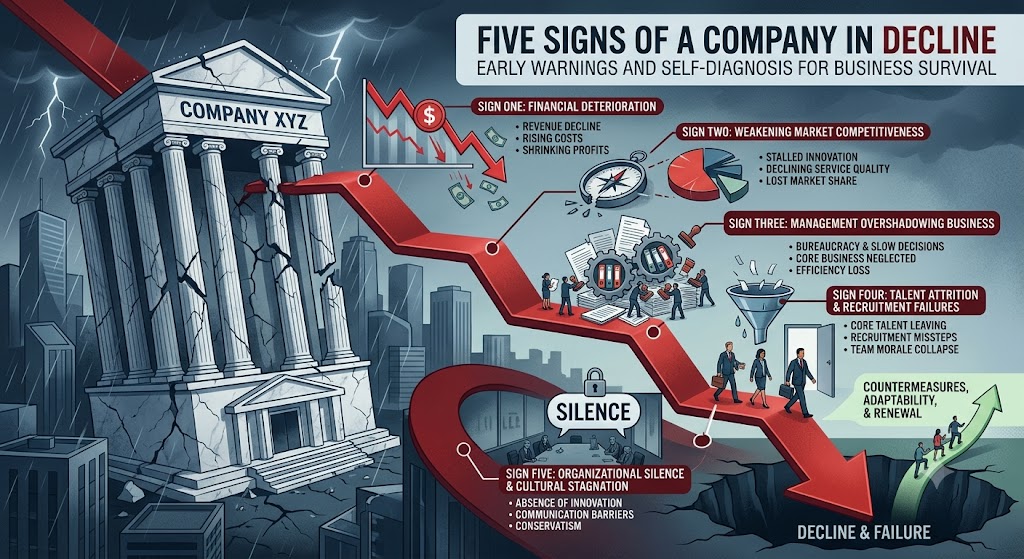
In today’s rapidly changing and fiercely competitive business environment, companies must maintain a high degree of vigilance and adaptability. Market uncertainty, shifting customer demands, and the swift pace of technological progress all place greater demands on organizations. It is therefore critical for companies to detect early signs that they may be heading downhill and take appropriate countermeasures. This matters not only for short-term performance, but for long-term survival and growth. This article examines some of the warning signs that may appear when a company begins to decline, analyzes the underlying causes, and aims to provide a reference for timely self-diagnosis and course correction.
Sign One: Deteriorating Financial Health
Case 1: Nokia, once the dominant force in mobile phones, clung to its Symbian operating system as smartphones emerged and failed to keep pace with Android and iOS. Revenue dropped sharply while R&D costs for new products rose, causing Nokia’s financial health to deteriorate rapidly. The company could no longer invest effectively in marketing, talent began to flee, employee morale collapsed, and Nokia ultimately lost its position in the handset market to other brands.
Case 2: During the 2008 financial crisis, Lehman Brothers held massive positions in subprime mortgage assets. As the property market collapsed, the value of those assets plummeted. The firm’s financial condition deteriorated quickly, liquidity dried up, and the century-old investment bank was driven into bankruptcy — an event that shook global financial markets and devastated employee morale.
Financial health acts as a mirror, reflecting a company’s operating condition with clarity. When revenues decline, costs climb, or profit margins narrow, these are warning signals that a company may be heading downhill.
Revenue decline: When a company’s operating income falls — whether from lower sales volume or reduced prices — the trend rings an alarm that something may have gone wrong with operations.
Rising costs: Higher operating costs, raw materials, labor, and other expenses can result from market changes, inflationary pressure, currency fluctuations, or supply chain problems, all of which place greater strain on the business.
Shrinking profit margins: As revenue falls and costs rise, profit margins erode, meaning each transaction yields less net income and the company may be edging toward losses.
Deteriorating financial health disrupts day-to-day operations, limits investment capacity, damages commercial credibility, and can undermine employee morale.
Operational difficulties: Cash constraints make it hard to sustain daily operations and service debt, potentially causing the business to stall or halt.
Investment constraints: A lack of funds prevents the company from committing sufficient resources to R&D, marketing, or expansion, impeding long-term development.
Loss of credibility: Worsening finances erode the confidence of suppliers, customers, and investors, deepening the company’s troubles.
Low employee morale: Instability makes employees anxious about the company’s future and their own career prospects, dampening enthusiasm and productivity.
Sign Two: Weakening Market Competitiveness
Case 3: BlackBerry once won market share with its distinctive design and powerful business features. As smartphones took over, however, BlackBerry struggled to innovate — its operating system and hardware design gradually fell behind the times, and its service quality failed to keep up with changing consumer expectations. These factors collectively eroded BlackBerry’s competitiveness, causing it to lose enormous market share and suffer serious damage to its brand image.
Case 4: Kodak was once the gold standard in the film industry, but the rise and widespread adoption of digital cameras dealt a devastating blow to traditional film. Kodak failed to pivot in time, holding on to its film business while new products — digital cameras and smartphones — rapidly devoured its market share. Its service and marketing strategies also failed to adapt to the new environment, ultimately causing a precipitous collapse in competitiveness and leading to the company’s downfall.
When a company finds that its product innovation has stalled, service quality is slipping, or competitors are quietly chipping away at its market share, these are clear signs that its market advantage is eroding.
Slowing pace of product innovation: New products or services seem to have lost their former innovative appeal and fail to satisfy increasingly discerning consumers. Product iterations crawl along, and competitive differentiation becomes blurry.
Declining service quality: Customer dissatisfaction grows, complaints multiply, service processes become cumbersome, response times stretch out, and customer satisfaction falls.
Market share quietly eroded: Loyal customers gradually defect, competitors expand their market footprint, the company’s voice in the market weakens, and even prospective new customers begin to look elsewhere.
Weakening market competitiveness leads to falling revenue, a tarnished brand image, and threats to long-term development.
Revenue declines: Insufficient innovation and deteriorating service quality drive customers toward competitors, and revenue inevitably suffers.
Brand image suffers: Loss of market share and declining service quality damage the brand and erode customer trust.
Development path becomes rocky: Weakened competitiveness creates obstacles for future growth — without innovation and market recognition, attracting investors or expanding into new business areas becomes extremely difficult.
To restore market competitiveness, companies need to address both internal and external dimensions: internally, by closely understanding shifts in market and consumer needs and flexibly adjusting product strategy; and by continuously optimizing service processes to improve efficiency and quality. Externally, by monitoring competitors closely, identifying their own points of differentiation and innovation, and using well-targeted marketing strategies to attract and retain key customer segments.
Sign Three: Management Overshadowing Business Performance
Case 5: General Motors was once the crown jewel of American auto manufacturing, but over time a bureaucratic culture took root. Management became overly focused on internal processes and rules, neglecting market needs and customer feedback. Decision-making grew slow and cumbersome, leaving the company unable to respond in time to market changes and consumer demands. This bureaucratic tendency ultimately weakened GM’s competitiveness and pushed it into a severe financial crisis.
When a company’s internal management processes become so complex that they overshadow attention to core business growth — when rigid adherence to rules and procedures stifles innovation — it signals that the company may have sunk into a management quagmire and lost the flexibility to respond to market rhythms and shifting customer needs.
Core business pushed to the margins: Management becomes absorbed in internal affairs and process adjustments, neglecting the ongoing development and innovation of core businesses. Market signals and customer feedback fade into background noise, and new product launches fall out of sync with market timing.
Management processes become a burden: The company is filled with lengthy approval chains, rigid rules, and inflexible systems. Employees exhaust themselves navigating layer upon layer of sign-offs, and even simple tasks are trapped in complex procedures.
The shadow of bureaucracy: The organization is gradually enveloped in a bureaucratic atmosphere — decisions move like heavy boulders, slowly and painfully. Employees must wait for directives and approvals at every step, and efficiency is silently consumed.
This management imbalance not only drags down efficiency but also shackles innovation and gradually wears away employee enthusiasm.
Efficiency loss: Employees become lost in complex processes, time and energy are wasted needlessly, and slow decision-making further erodes productivity.
Innovation shackled: The heavy hand of management limits the company’s market sensitivity and innovative capacity. Opportunities slip by, and launching new products and services becomes an arduous struggle.
Morale suffers: Employees feel suffocated by cumbersome procedures and a stifling atmosphere. Their passion and results go unrecognized, and they feel lost and disheartened about the company’s future.
To break free from this management trap, senior leadership needs deep self-reflection and decisive action. Solutions can be approached from several angles:
Management and operations in harmony: Leadership must recognize that management and operations should reinforce each other — strengthening internal governance while ensuring the business continues to grow and innovate. Business strategy should be regularly revisited to keep it aligned with market signals.
Faster, more agile decision-making: Break the grip of bureaucracy and establish decision-making mechanisms that respond quickly to market needs. Bring management closer to the pulse of the market so that decisions address each change nimbly.
Streamline and optimize processes: Conduct a thorough review of internal management processes and simplify them, eliminating redundant rules and systems. Encourage employees to take initiative and exercise creativity, making workflows more efficient and smooth.
Reignite passion and innovation: Through systematic training, incentives, and promotion opportunities, rekindle employee passion and spark a culture of innovation. Listen to employees and adjust management strategies accordingly, so that every employee becomes a source of energy for the company’s growth.
Sign Four: Talent Attrition and Recruitment Failures
Case 6: Google, as a global technology giant, understands the critical importance of talent. To retain key people, Google offers highly competitive compensation and benefits — free meals, fitness facilities, and rich employee programs. It also provides broad career development opportunities and continuous learning, ensuring employees can grow within the company. These measures have effectively reduced attrition, and raised employee satisfaction and loyalty.
When a company’s key talent starts leaving in significant numbers, it often reflects inadequate incentives, blocked career development paths, or an unsatisfactory working environment. Meanwhile, mistakes in the recruiting process can lower the overall quality of teams, affecting the company’s overall competitiveness.
Core talent quietly slipping away: Skilled, experienced, and business-critical professionals begin quietly seeking new opportunities. These may be technical experts, sales leaders, or key project managers.
Recruitment missteps: When hiring, the company fails to accurately assess candidates’ capabilities, potential, and fit for the role — resulting in new employees who cannot perform adequately or cannot integrate into the team.
These errors and losses inflict significant negative consequences:
Business gaps and knowledge drain: When core talent leaves, important projects often stall, as these individuals hold critical business knowledge and customer relationships. Worse, valuable institutional experience and expertise walks out the door with them.
Team morale collapses: Watching key colleagues leave creates anxiety among remaining employees, who begin to feel uncertain about the team’s future and the company’s direction, undermining cohesion and fighting spirit.
Wasted resources and sluggish efficiency: Recruitment failures force the company to spend more time and energy finding replacement candidates and conducting training, raising operational costs and potentially keeping teams in a low-efficiency state for a prolonged period.
To reverse this, companies must focus on three areas — recruiting, talent activation, and retention:
Sharpen recruitment practices: Build rigorous and efficient recruitment mechanisms and evaluation criteria to ensure every new hire has strong professional skills and teamwork ability. Provide specialized interviewer training to improve the ability to identify and attract top talent.
Create an ideal work environment: Build a vibrant, open, and inclusive culture that encourages collaboration and innovation. Pay close attention to employee experience and address problems and frustrations promptly.
Strengthen incentive structures: Review and optimize compensation and benefits to ensure key talent receives market-competitive remuneration. Offer diverse non-financial incentives — promotion paths, professional development, and personal growth plans — to deepen employee loyalty and sense of belonging.
Sign Five: Organizational Silence and Cultural Stagnation
When employees choose to stay silent, and when the company culture loses its vitality and innovative spark, it may signal that internal communication has broken down, employee engagement has dropped, and the organization has become slow to respond to changes in the external environment. Specific manifestations include:
Employee silence: In company meetings, employees tend to stay quiet, unwilling or afraid to openly express their views and suggestions. Even when private dissatisfaction and opinions abound, few are willing to speak up.
Absence of an innovation culture: The company culture feels stale and rigid, with little encouragement or support for new ideas and approaches. Employees adopt a cautious or even negative attitude toward anything new, preferring to maintain the status quo.
Communication barriers: An invisible wall seems to stand between departments, and between employees and management. Information passes through a fog — misunderstandings and delays are common. Employees frequently have only a vague understanding of company decisions and direction, creating difficulties in execution.
This organizational silence and cultural stagnation make the entire enterprise increasingly conservative and overly cautious. Teams shift toward blind compliance and task execution — checking in and reporting up the chain on everything, with little initiative or creativity. The impacts are significant:
Risk of poor decisions: Because employees are reluctant to speak up, management may struggle to access complete information and diverse perspectives when making decisions, increasing the risk of getting things wrong.
Innovation capacity constrained: A rigid culture and absence of an innovation climate severely limit the company’s ability to innovate. In a market that changes by the day, a company without innovation is easily left behind by competitors.
Declining employee engagement: Employee silence and communication barriers drastically reduce participation in and commitment to company affairs. Employees may feel their work is not valued, causing them to lose enthusiasm and motivation.
Sluggish response crisis: Internal communication obstacles and declining employee engagement make the company slow to respond to market shifts and changing customer needs — and it may even miss critical business opportunities.
To break this impasse, senior leadership must first recognize the problems of organizational silence and cultural stagnation, and can approach solutions from several angles:
Build open communication channels: Actively encourage employees to share opinions and suggestions — set up anonymous suggestion boxes or hold regular employee forums so people can speak freely. Management should respond positively to employee input, creating a culture of genuine dialogue.
Cultivate fertile ground for innovation: Spark and support employees’ creative thinking through innovation competitions, innovation funds, and similar initiatives. Recognize and reward innovative achievements appropriately to ignite employees’ passion for innovation.
Strengthen internal training and exchange: Regularly organize communication and team collaboration training to improve employees’ communication skills and team awareness. Use training to convey the company’s core values and vision, strengthening employees’ sense of belonging and purpose.
Conclusion
When a company shows signs of declining performance, customer attrition, low employee morale, poor internal communication, or slow management decision-making, these often foreshadow that the company may be heading downhill. Behind these symptoms typically lie deeper causes — misaligned market positioning, lagging product innovation, chaotic internal management, or deteriorating financial health. In a fiercely competitive market environment, companies that cannot adjust their strategy in time and adapt to market changes will easily fall into difficulty.
In the face of a potential decline, prevention and response measures are of paramount importance. By establishing a sound early-warning system, companies can identify potential problems sooner, allowing adequate time for adjustment and optimization. Effective countermeasures — repositioning in the market, accelerating product innovation, improving internal management, and strengthening financial health — can all help a company regain its footing, and may even enable counter-cyclical growth. Prevention and response are therefore of critical significance to a company’s long-term, stable development.
In a fast-changing market environment, companies must develop sharp market insight — detecting and seizing opportunities promptly — while also maintaining a spirit of continuous innovation, constantly introducing new ideas to meet consumers’ ever-more-diverse needs. The two go hand in hand: only by closely tracking market dynamics can a company find an endless stream of inspiration and direction for innovation; and only through constant innovation can a company stand out in fierce competition and achieve sustainable development. We therefore call on all companies to maintain keen market insight and a persistent spirit of innovation, in order to meet the ever-changing challenges of the market.
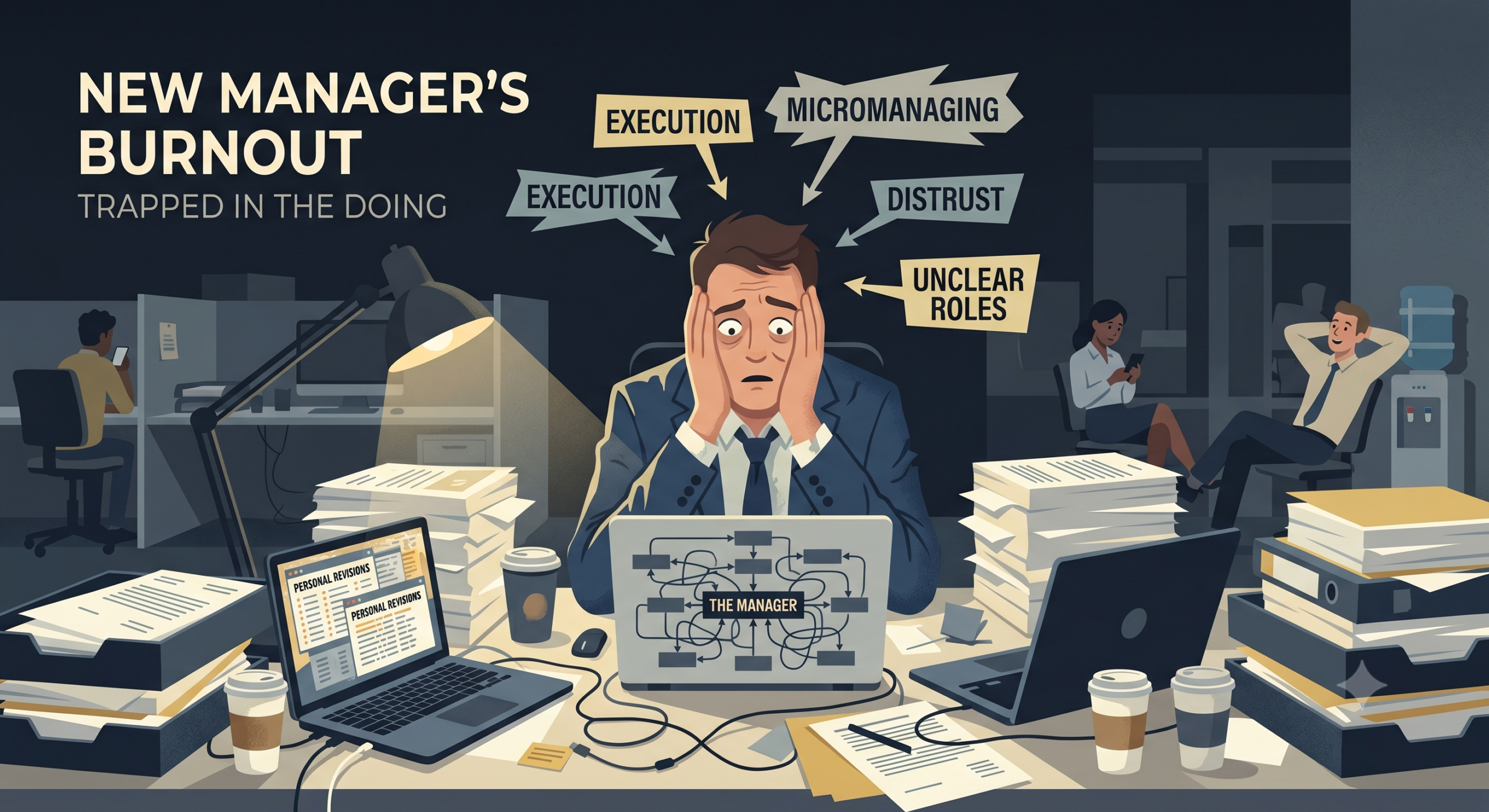
“Xiao Lin, starting next month, you won’t need to personally handle those specific execution tasks anymore,” his manager told him during his promotion talk.
Hearing this, Xiao Lin didn’t breathe a sigh of relief; instead, a sudden wave of panic hit him. If he wasn’t doing the work himself, what was he supposed to do? How would he prove his value? He had been a top performer for three years, ranking first in performance every year, driven by the belief that “no one is as reliable as I am.” Now, suddenly being told that his performance would no longer be judged by the work he delivered, but by what his team delivered, his first reaction was: I’m doomed. Doesn’t this mean I have to take the blame for everyone?
In his first month after the promotion, Xiao Lin fell into a vicious cycle. When he saw that Xiao Zhang’s proposal lacked logical flow, he took it back without a word and revised it himself until late at night. When he noticed Xiao Li’s emails to clients were poorly worded, he simply took over the client communication entirely. The tasks assigned during the weekly meetings rarely met his expectations, so he would sigh and think, “In the time it takes to teach them, I could have already finished it myself.” Consequently, he hoarded all the most important tasks.
Three months later, Xiao Lin had become the busiest manager in the company. Leaving the office last every night and working overtime on weekends became his norm. And his subordinates? Some were idle, some were just waiting around, and anything they did submit was ultimately overturned and redone. Worse still, team morale plummeted. People started complaining privately: “We learn absolutely nothing working under Manager Lin; he simply doesn’t trust us to do anything.”
Xiao Lin felt wronged and confused: Why am I more exhausted after getting promoted? Am I just not cut out for management, or is my team really that incompetent?
Actually, the answer is neither. The problem lies deep within him. Three invisible “inner demons” are quietly blocking his path as a manager.
1. Inner Demon One: Reluctance to Let Go — Craving Frontline Achievements
The first inner demon is “reluctance to let go.”
Almost every newly promoted manager was once a top-tier frontline expert. Xiao Lin is no exception. He was promoted precisely because his skills in writing proposals, negotiating with clients, and executing tasks were exceptional, and he derived immense satisfaction from them. The thrill of “I handled everything myself” is more direct and certain than any external reward.
As a result, when faced with unfamiliar and tricky “management tasks”—like coordination work that requires repetitive communication or talent development that demands patient coaching—his instinct is to flee. Flee to where? Back to the execution tasks he knows best. Personally tweaking a few slides or replying to a few emails instantly gives him the comforting sense of “I accomplished something today.”
But this sense of security is a trap for a manager. Every time you retreat to the frontline to do a task, it means you neglected a task you should actually be doing: developing your team, allocating resources, and streamlining processes. The more comfortable you are in your comfort zone, the less your team grows. Ultimately, you become the bottleneck for the entire team—everything gets stuck with you, you are exhausted, and your team remains weak.
2. Inner Demon Two: Lack of Trust — Believing Subordinates Can’t Measure Up
The second inner demon is “lack of trust.”
When Xiao Lin took back Xiao Li’s proposal to redo it, he had only one thought: “His work is far from acceptable; presenting this will only embarrass me.” He also felt, “Nobody taught me when I started, and I still made it to number one. Why should I hold their hands?” More importantly, “In the time it takes to teach them, I could have already done it myself.”
This is perhaps the most hidden arrogance of elite workers-turned-managers. On the surface, it looks like a “sense of responsibility” for the final outcome; but deep down, it is a deprivation of others’ room to grow. If you never feel comfortable handing anything over, others will never get the chance to struggle, make mistakes, correct themselves, and grow through actual tasks.
Furthermore, trust is not built out of thin air. If you never give a subordinate the chance to complete a task from start to finish, you will never see that “they actually can do it.” The less you trust, the less you let go; the less you let go, the less evidence of trustworthiness you see. Once this vicious cycle forms, the result is inevitable: you monopolize everything, carrying the department’s heaviest burdens alone, while your subordinates handle fringe tasks, their skills stagnate, and they eventually want to leave.
The third inner demon is more subtle: “lack of clarity.”
New managers often have a black-and-white misconception about delegation: either dump all the work on the subordinates and be a totally hands-off boss, or decide the timing isn’t right and just do everything yourself. Xiao Lin struggled with this too. He once tried handing a project entirely to Xiao Zhang, which ended in a mess and a client complaint. Xiao Lin had to step in to fix it. After that, he concluded: “I just have to do it myself.”
What he actually lacks is a clear understanding of the Delegation Ladder.
Delegation is never simply “throwing a task over the wall”; it is a gradual process. Depending on the difficulty of the task and the maturity of the subordinate, delegation can be broken down into progressive stages:
You do it, they watch: You demonstrate the entire workflow, explaining as you go, while the subordinate observes and learns.
You give clear instructions, they execute: You provide specific methods, steps, and deadlines. They execute according to your instructions, and you check in regularly.
You set the direction, they figure it out: You only outline the goals and boundaries, letting them design the execution plan. You only provide input at key milestones.
You fully empower them: You only retain the right to be informed and to hold them accountable; how they execute is entirely up to them.
A manager must have a clear sense of which stage a current task is in, how involved they need to be, and which decisions must be made personally. If this framework is a mess, you will constantly bounce between “micromanaging” and “over-delegating,” eventually defaulting back to your habit of doing everything yourself out of sheer frustration.
4. The Way Out: Turning “Doing Hands” into “Developing Eyes”
If you see your own reflection in these three inner demons, where do you start breaking the cycle? The answer lies not in techniques, but in how you redefine your job.
Change the Evaluation Formula in Your Head: As an individual contributor, Your Value = Your Own Output. As a manager, Your Value = The Sum of Your Subordinates’ Output. This means the vast majority of your time moving forward should be spent on “enabling subordinates to produce better,” rather than “producing on their behalf.” You must break the addiction of jumping into the trenches and accept the sense of loss that comes with your name no longer being directly on the credit roll. It is painful, but it is a necessary hurdle to becoming a true manager.
Replace Internal Drama with the Delegation Ladder: The next time you are about to hand off a task, don’t ask yourself, “Can they really handle this?” Instead, ask: “Which step of the delegation ladder does this task currently belong on?” If it requires demonstration, spend the time to show them; if it’s time to let go, bite your tongue, tie your hands, and only ask for the results. In this way, delegation shifts from an emotional struggle to a rational process.
Upgrade “Worry” into a Mechanism for “Letting Go”: Empty talk about trust is useless; trust requires structural scaffolding. You can implement three specific practices:
Standardize Workflows: Turn common, repetitive tasks into written, systematic processes. When subordinates have guidelines to follow, your anxiety will be cut in half.
Establish an Error Quota: Clearly tell your subordinates the scope and financial limit within which they can make their own decisions. If mistakes happen within these bounds, treat them as a training cost that you will absorb.
Build a Feedback Loop: Dedicate fixed time every week for reviews. This isn’t for you to pick apart their flaws, but for them to share what they did, what challenges they faced, and how they plan to improve next time. You listen, ask questions, and guide them. After a few cycles, their confidence—and yours—will grow.
An excellent manager isn’t the person who runs the fastest, but the one who gets a group of people to run alongside them—and run faster and faster.
To achieve this transformation, you must first acknowledge the internal barriers of “reluctance to let go,” “lack of trust,” and “lack of clarity.” Then, with patience, cultivate your subordinates as if they were your greatest masterpieces. When you can finally take a vacation with peace of mind while the team operates smoothly, you will understand: that is the true achievement of a manager.
The next time you feel the urge to do it yourself, silently tell yourself:”Stop doing the things I am already familiar with. The work I truly need to do is elsewhere.”That work is helping your subordinates grow.