I. The Concept and Value of Employee Engagement
Employee engagement is generally defined as the level of commitment and involvement an employee has towards their work and the organization’s goals, as well as their enthusiasm and proactivity in the workplace. Simply put, it reflects the extent to which employees are willing to work hard for the company’s success and take on more responsibilities.
The level of employee engagement is directly related to the development of the enterprise. Highly engaged employees tend to be more dedicated; they don’t just work for a paycheck but genuinely want the organization to succeed. Such employees are more likely to generate innovative ideas, take the initiative to solve problems, and hold a more positive attitude toward challenges at work. Therefore, high employee engagement can bring higher production efficiency, better product quality, and superior service to the enterprise.
Highly engaged employees are also more likely to become loyal advocates for the company, actively recommending it to family and friends, thereby enhancing the company’s brand influence and market reputation. At the same time, highly engaged employees are more prone to forming a spirit of teamwork, facing and solving problems together, and further improving the overall operational efficiency of the company.
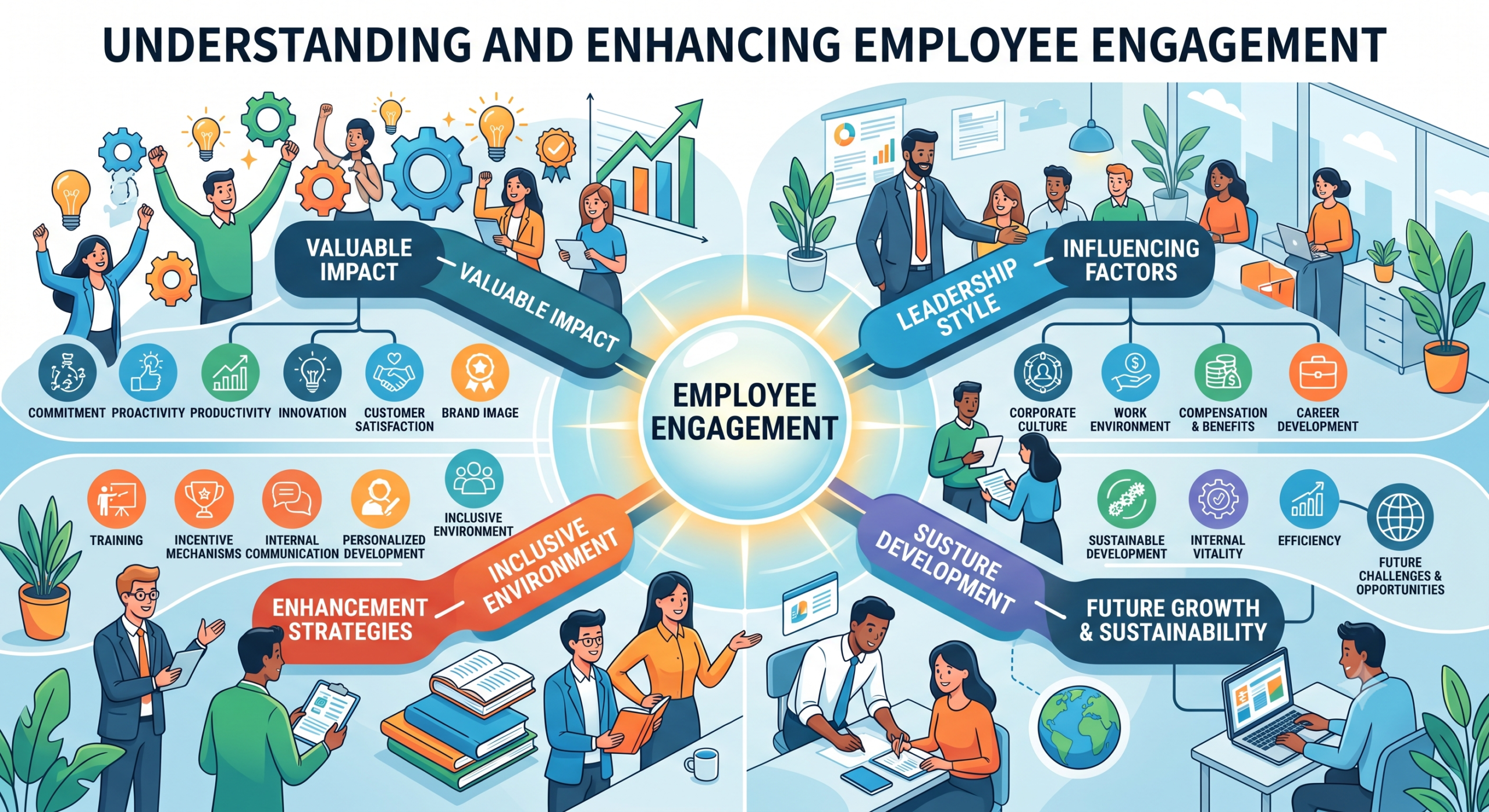
Employee engagement is not only about employees’ work attitudes and satisfaction but also directly impacts the overall operation of the business. The following will detail the significant impact of employee engagement on business operations from several aspects: improving production efficiency and innovation capabilities, enhancing customer satisfaction and brand image, reducing employee turnover and recruitment costs, and creating a positive work atmosphere and teamwork spirit.
Improving Production Efficiency and Innovation Capabilities: Highly engaged employees are full of passion and motivation for their work. They focus more on tasks and reduce distractions, thereby effectively improving production efficiency. In addition, high employee engagement can stimulate innovative thinking. When employees are fully invested in their work, they are more likely to identify problems and propose solutions, driving innovation in products and services and bringing a competitive advantage to the enterprise.
Enhancing Customer Satisfaction and Brand Image: Employees are the bridge between the company and its customers. Highly engaged employees are more likely to provide high-quality service because they care about the company’s success and want to create the best experience for customers. This positive service attitude is passed on to customers, enhancing customer satisfaction and thereby elevating the company’s brand image. A positive brand image not only attracts new customers but also promotes the loyalty and repeat purchase behavior of existing customers.
Reducing Employee Turnover and Recruitment Costs: Employee engagement is closely related to employee job satisfaction and loyalty. When employees feel their work is valued and can find a sense of belonging and achievement within the company, they are more likely to stay with the company long-term. This not only reduces the employee turnover rate but also cuts down on recruitment and training costs associated with employee departures. A stable workforce helps the company maintain operational continuity and avoid business interruptions caused by staff turnover.
Creating a Positive Work Atmosphere and Teamwork Spirit: Highly engaged employees are often passionate about their work, and their positive attitude can infect the colleagues around them, thereby creating a positive work environment. In such an environment, employees are more willing to cooperate with each other, face challenges together, and form a strong teamwork spirit. This team spirit not only improves the company’s operational efficiency but also enhances the company’s cohesion and ability to withstand risks.
In summary, the impact of employee engagement on business operations is comprehensive, from improving production efficiency to enhancing customer satisfaction, to reducing employee turnover and creating a positive work atmosphere; every link is crucial. Therefore, enterprises should prioritize the enhancement of employee engagement and formulate effective strategies and measures to stimulate employees’ work enthusiasm and innovation capabilities, thereby achieving sustainable development for the enterprise.
II. Factors Influencing Employee Engagement
Employee engagement is influenced by a variety of factors. The following will provide a detailed introduction from several dimensions: the shaping of corporate culture and values, leadership style and employee motivation, work environment and facility conditions, compensation and benefits, and employee care, as well as personal career development opportunities and prospects.
The Shaping of Corporate Culture and Values Corporate culture is a collection of internal behavioral norms and values within an enterprise, profoundly influencing employees’ work attitudes and behaviors. A positive, upwardly mobile corporate culture that emphasizes teamwork and an innovative spirit can stimulate employees’ sense of belonging and pride, thereby increasing their engagement. Conversely, if the corporate culture is negative, bureaucratic, or lacks clear value guidance, employees may feel confused and alienated, leading to reduced engagement.
The shaping of values is equally important. When a company’s values align with an employee’s personal values, the employee is more likely to develop a sense of identification and be willing to exert effort toward the company’s goals. Therefore, enterprises should clarify and communicate their values, and through training and guidance, enable employees to understand and accept these values, thereby increasing their engagement.
Leadership Style and Employee Motivation Leadership style has a significant impact on employee engagement. An open and supportive leadership style can encourage employees to express their ideas and participate in the decision-making process, thereby increasing their engagement and job satisfaction. Conversely, an autocratic or laissez-faire leadership style may lead to employees lacking a sense of participation, reducing their motivation to work.
Employee motivation is also an important means to increase engagement. In addition to basic compensation and benefits, enterprises can motivate employees through goal setting, performance evaluation, and reward mechanisms. When employees feel their work is recognized and rewarded, they are more likely to actively participate in work and strive to achieve corporate goals.
Work Environment and Facility Conditions A good work environment and facility conditions can improve employees’ work efficiency and comfort, thereby enhancing their engagement. For example, providing a spacious and bright office space, advanced office equipment, and convenient transportation conditions can all help improve employee job satisfaction and engagement. In addition, enterprises can also reduce employees’ work pressure by improving work processes and providing necessary resources and support, allowing them to focus more on their work and actively participate in it.
Compensation and Benefits and Employee Care Compensation and benefits are among the important factors employees consider when choosing a job. A reasonable compensation and benefits system can reflect the company’s recognition and respect for its employees, thereby improving employee satisfaction and loyalty. In addition to basic salaries, enterprises can also consider providing performance bonuses, health insurance, and annual leave as benefits to attract and retain outstanding employees.
Employee care is also a crucial factor in improving engagement. Enterprises should pay attention to employees’ life and work situations, providing necessary support and help. For example, establishing Employee Assistance Programs (EAPs) to focus on employees’ mental health and family issues, and providing flexible work hours and locations, can increase employees’ sense of belonging and loyalty to the company.
Personal Career Development Opportunities and Prospects Employees usually attach great importance to their career development. If an enterprise can provide clear promotion paths and training opportunities, employees will feel they have a longer-term development prospect within the company, thereby actively participating in work. In addition, enterprises can also encourage employees to participate in cross-departmental or cross-disciplinary project collaborations to broaden their horizons and experience.
To improve employee engagement, enterprises should regularly communicate with employees about their career development, understand their expectations and goals, and provide corresponding support and resources. When employees see that their efforts can be recognized and they have the opportunity to realize their personal value, their engagement will naturally increase.
III. Strategies and Practices to Enhance Employee Engagement
Enhancing employee engagement is an important guarantee for the continuous development of an enterprise. The following strategies and practices can be approached from multiple dimensions to effectively improve employee engagement.
Regularly Conduct Employee Training and Skill Enhancement Courses: Enterprises should regularly conduct targeted training and skill enhancement courses based on the job requirements and personal development needs of employees. This not only improves employees’ professional capabilities and work efficiency but also allows them to feel the company’s attention and investment in them, thereby enhancing their engagement and loyalty. Training courses can include professional skills training, leadership training, and communication skills training, aimed at helping employees better perform their jobs and possess greater development potential.
Establish Effective Incentive Mechanisms and Reward Systems: To stimulate employees’ enthusiasm for work and engagement, enterprises need to establish effective incentive mechanisms and reward systems. This can include various forms such as performance bonuses, outstanding employee awards, and promotion opportunities. Clear reward standards let employees know their work goals and the direction of their efforts, allowing them to invest more in their work. At the same time, enterprises can also provide personalized reward plans based on employees’ personal needs and preferences, such as offering travel opportunities or health insurance, to increase employees’ sense of belonging and satisfaction with the company.
Strengthen Internal Communication and Information Sharing: Good internal communication and information sharing are crucial for improving employee engagement. Enterprises should establish unhindered communication channels, encourage employees to make suggestions and comments, and provide timely feedback. At the same time, regular team meetings, workshops, and other activities can promote communication and cooperation among employees to solve problems together. In addition, enterprises can also use internal network platforms or bulletin boards to promptly share company news, business information, and industry updates, making employees feel they are part of the company, thereby increasing their engagement and sense of responsibility.
Provide Personalized Career Development Paths and Promotion Opportunities: Every employee has their own career plan and goals. Enterprises should provide personalized career development paths and promotion opportunities based on the individual characteristics and needs of employees. By formulating clear promotion paths and training plans for employees, they can see their development prospects within the company, thereby engaging more actively in their work. At the same time, enterprises can also provide employees with opportunities for job rotation across departments or fields to broaden their horizons and experience, enhancing their job challenges and satisfaction.
Create a Supportive and Inclusive Work Environment: A supportive and inclusive work environment allows employees to feel respected and recognized, thereby improving their engagement and job satisfaction. Enterprises should advocate a diverse cultural atmosphere, respect employee differences and diversity, and avoid discrimination and prejudice. At the same time, provide necessary work support and resource guarantees for employees, such as reasonable work arrangements and flexible work options, to reduce employee work pressure and improve their work efficiency. In addition, enterprises can regularly organize team-building activities or employee care activities to enhance cohesion and teamwork among employees.
In summary, through strategies and practices such as regularly conducting employee training and skill enhancement courses, establishing effective incentive mechanisms and reward systems, strengthening internal communication and information sharing, providing personalized career development paths and promotion opportunities, and creating a supportive and inclusive work environment, enterprises can effectively enhance employee engagement and drive sustainable development.
IV. Conclusion and Outlook: The Importance and Future Development of Employee Engagement
The Importance of Employee Engagement to the Sustainable Development of the Enterprise Employee engagement is a key indicator for measuring a company’s internal vitality and efficiency. When employees are genuinely invested in their work, they not only create greater value for the company but also become an important force driving the company’s sustainable development. A highly engaged workforce often means higher production efficiency, stronger innovation capabilities, and better customer service. These are key factors for a company to gain an advantage in a fiercely competitive market.
In addition, highly engaged employees are more likely to develop loyalty and a sense of belonging to the company, which helps reduce employee turnover and thereby decreases recruitment and training costs. A stable workforce is not only conducive to the transmission of corporate culture but also ensures business continuity and stability.
Challenges and Opportunities for Improving Employee Engagement in the Future In the future, with changes in the labor market and shifts in the values of the new generation of employees, enterprises will face new challenges in enhancing employee engagement. For example, the new generation of employees may place greater emphasis on work-life balance, personal growth opportunities, and alignment with corporate culture. This means enterprises need to pay more attention to the personalized needs of employees, providing a more flexible and humane work environment and benefits system.
At the same time, the rapid development of technology also brings new opportunities to enhance employee engagement. For example, by utilizing advanced collaboration tools and platforms, enterprises can break through geographical and time constraints, promoting communication and cooperation among employees. Furthermore, by using big data and artificial intelligence technologies, enterprises can more accurately analyze employee needs and behavioral patterns, thereby formulating more precise incentive strategies.
Enterprises Should Continuously Monitor and Optimize Employee Engagement Strategies Facing the challenges and opportunities of future employee engagement enhancement, enterprises should continuously monitor and optimize their employee engagement strategies. First, enterprises need to deeply understand the true needs and expectations of employees, ensuring that the incentives provided align with employees’ values and goals. Second, enterprises should regularly evaluate and adjust the effectiveness of employee engagement strategies, ensuring that these strategies can be flexibly adjusted as the market and employee needs change. Finally, enterprises should fully utilize technological means to enhance interaction and cooperation among employees, thereby creating a more positive and efficient work environment.
In summary, employee engagement is a crucial cornerstone for the sustainable development of an enterprise. In the face of future challenges and opportunities, enterprises should continuously monitor and optimize their employee engagement strategies to ensure they can stimulate the maximum potential of their employees and jointly drive the long-term development of the company.
(End of article)